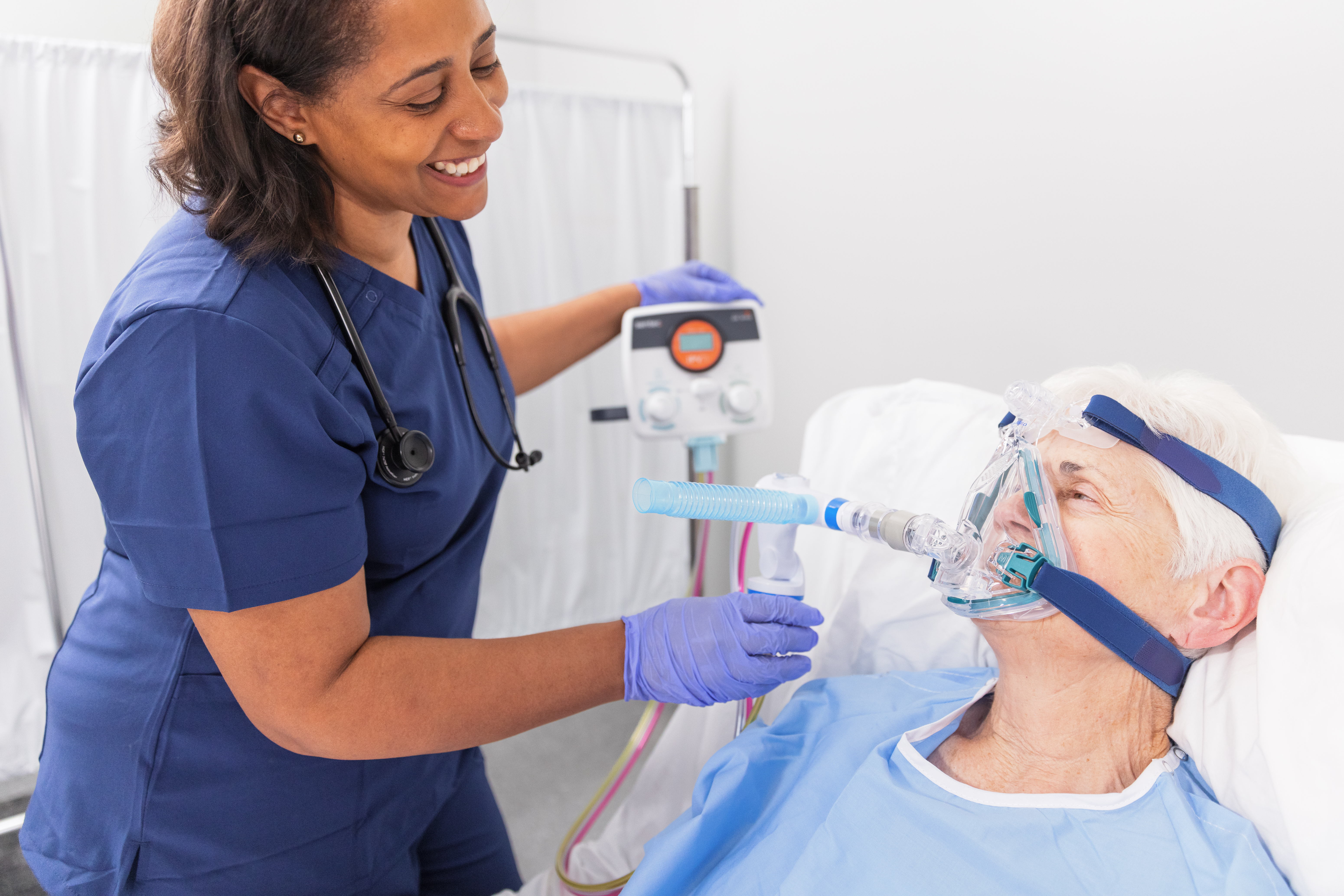

Airway clearance techniques (ACTs) are an important part of care for patients with excess secretions or difficulty clearing mucus on their own. In individuals with conditions such as neuromuscular disease, chronic lung disease, acute illness, or those who are intubated or recovering from surgery, retained mucus can obstruct airflow, impair gas exchange, and increase the risk of respiratory complications.
Among airway clearance techniques available, two commonly used therapies are mechanical insufflation-exsufflation (MI-E), often referred to as “cough assist”, and intrapulmonary percussive ventilation (IPV) therapy. While both support airway clearance, they target secretions in different regions of the lungs, which shapes their distinct clinical roles and potential benefits in patient care.
What is Mechanical Insufflation-Exsufflation (MI-E)?
MI-E, commonly referred to as a “cough assist,” is designed to augment a patient’s cough to help expel airway secretions.
These systems deliver positive pressure (insufflation) followed by a rapid shift to negative pressure (exsufflation). The sudden change in pressure generates a high expiratory flow, simulating the natural flow of a cough to help mobilize and expel secretions from the upper airways.
What is IPV Therapy?
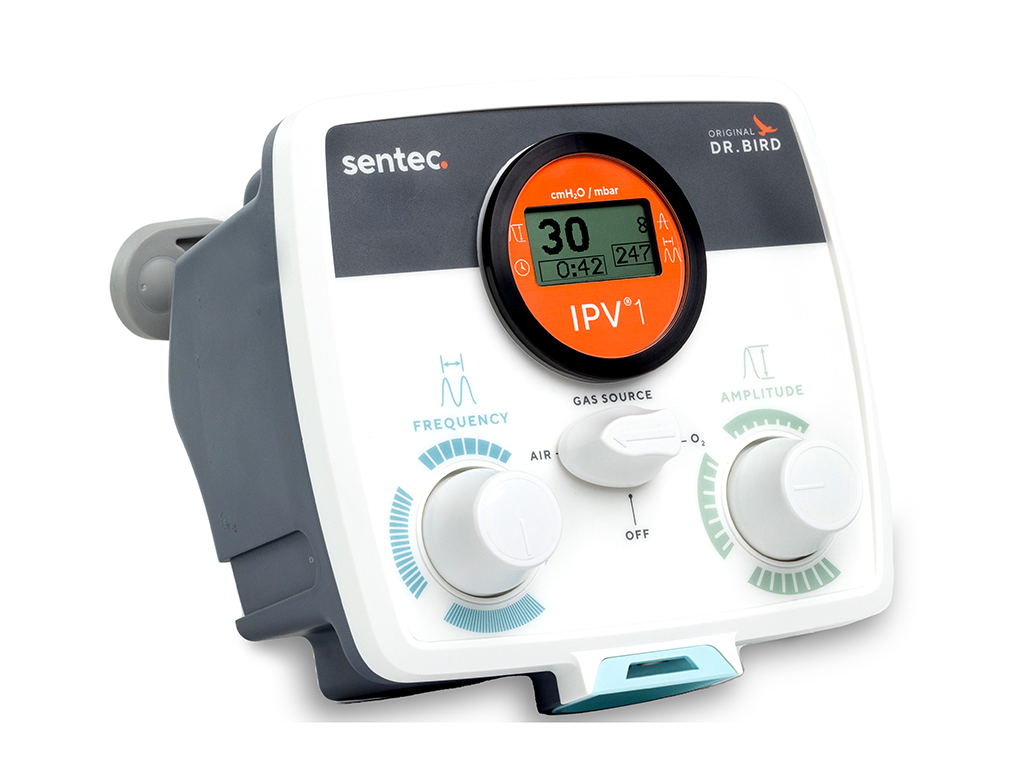
IPV therapy is an airway clearance technique that delivers high-frequency, pulsatile bursts of air into the lungs.
These rapid, small-volume breaths help loosen mucus while creating high-velocity airflow that can move through obstructed areas and reach deeper to the distal airways. By mobilizing secretions throughout the lung, IPV therapy supports airway clearance while also helping recruit areas affected by atelectasis or air trapping.
Proximal vs. Distal Airway Clearance
A key distinction between MI-E and IPV therapy is the areas of the lungs each therapy can target.
MI-E: Central and Proximal Airways
Cough assist devices are only able to mobilize and clear secretions from the central and proximal airways.
By facilitating a high expiratory flow, MI-E helps move secretions out of the trachea and larger bronchi, simulating the effect of a natural cough. Because of this, impaired cough strength is a key indication for MI-E therapy. It is commonly used to support patients with conditions such as neuromuscular disease, where reduced cough effectiveness can lead to secretion accumulation in the upper airways.
For patients with secretions retained in the distal airways, MI-E often needs to be combined with another airway clearance therapy to help address the full burden of secretions.
IPV Therapy: Central and Distal Airways
In contrast, IPV therapy can target secretions in both the central airways and the smaller bronchi and distal lung regions. Its high-velocity, pulsatile flow allows it to access areas beyond obstructions and reach deeper into the lungs, helping mobilize secretions that may be difficult to reach with other airway clearance approaches.
Because of this deeper reach, IPV therapy is indicated for retained distal secretions. It can also help address atelectasis and reduce air trapping by facilitating lung recruitment and helping clear blockages throughout the lung.
Why the Whole Lung Matters
Effective airway clearance is a critical component of care for many patients, as retained secretions are not just inconvenient — they can have serious consequences if left untreated.
Secretions that remain in the airways can:
- Obstruct airflow, which can cause discomfort while breathing, increase work of breathing, and impair gas exchange.1
- Increase infection risk, as stagnant mucus can serve as a breeding ground for bacteria and contribute to respiratory tract infections.2
- Cause atelectasis, or collapse of alveoli, when airway obstruction prevents air from reaching distal lung regions.3
- Promote air trapping, as airflow obstruction and lung damage can make it difficult for air to escape the lungs during exhalation.4
Beyond these immediate effects, mucus plugs in the lungs have been associated with more complex clinical courses and poorer outcomes, including poorer lung function,5 development or worsening of bronchiectasis,6 and extubation failure.7
Because secretions can accumulate throughout the airway tree, from the central bronchi to the small bronchioles and distal lung regions, targeting only part of the lung may leave areas untreated. When mucus remains in these regions, patients can remain vulnerable to the complications associated with retained secretions.
Supporting optimal respiratory function may require an airway clearance strategy that addresses the full length of the airways, like IPV therapy. By mobilizing secretions from both central and distal lung regions, these approaches help ensure that mucus is not left behind, which can help address immediate concerns such as obstruction and infection while also supporting better long-term lung health and patient outcomes.
References:
-
- Sarkar, M., et al. Mechanisms of hypoxemia. Lung India. 2017.
- Fahy, J.V., et al. Airway mucus function and dysfunction. N Engl J Med. 2010.
- Grott, K., et al. Atelectasis. StatPearls. 2024.
- Nardini, S., et al. COPD: maximization of bronchodilation. Multidiscip Respir Med. 2014.
- Vestbo, J., et al. Association of chronic mucus hypersecretion with FEV1 decline and chronic obstructive pulmonary disease morbidity. Copenhagen City Heart Study Group. Am J Respir Crit Care Med. 1996.
- Herrero-Cortina, B.,et al. European Respiratory Society statement on airway clearance techniques in adults with bronchiectasis. Eur Respir J. 2023.
- Haruna, J., et al. Frequent tracheal suctioning is associated with extubation failure in patients with successful spontaneous breathing trial: a single-center retrospective cohort study. JA Clin Rep. 2022.