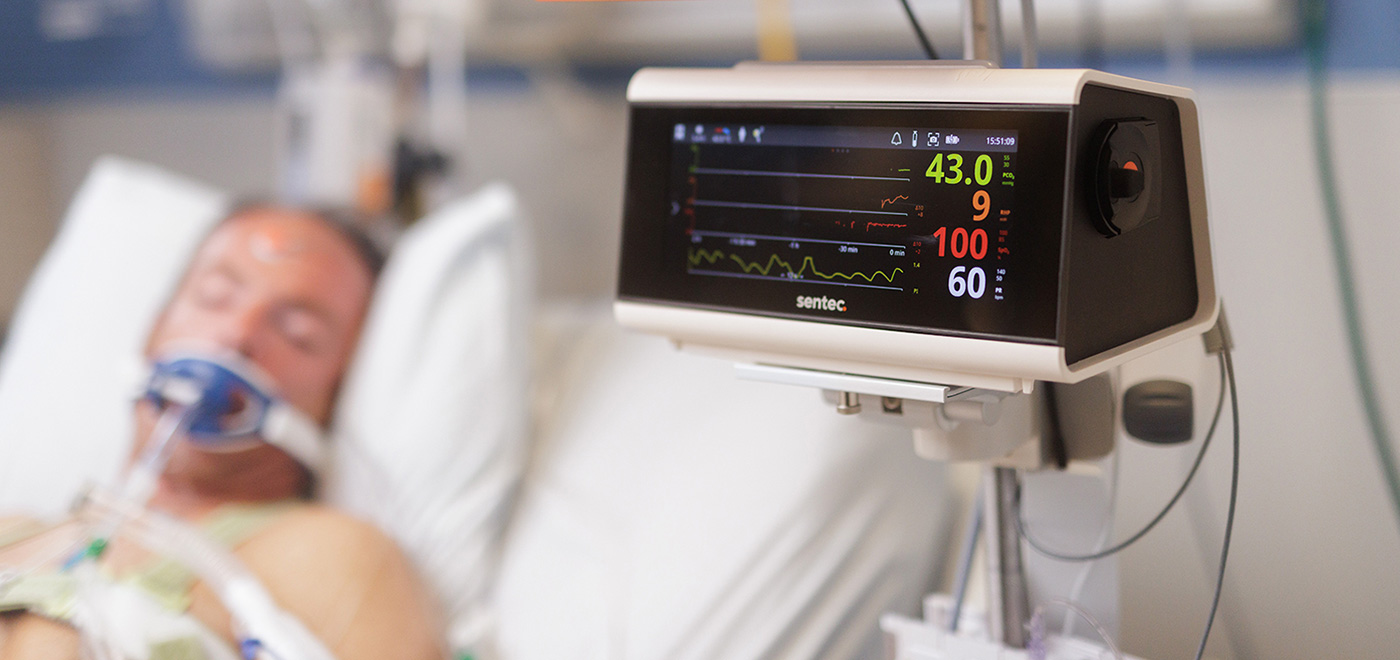
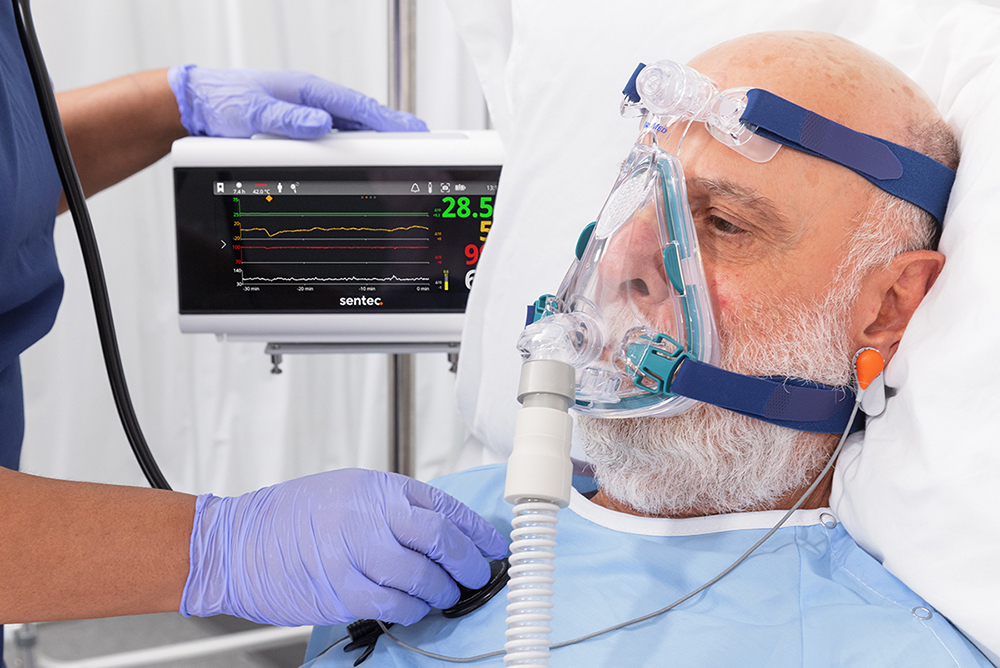
Accurate, continuous CO2 monitoring that helps pulmonology and sleep lab teams tailor NIV therapy to each patient’s evolving needs.

Non-invasive ventilation (NIV) for hypercapnic respiratory conditions has grown substantially, supported by strong evidence across patient groups. To achieve the best outcomes, ensure effective support, and enable quick detection of issues, settings should be personalized, ventilation monitored continuously, and patients reassessed regularly.
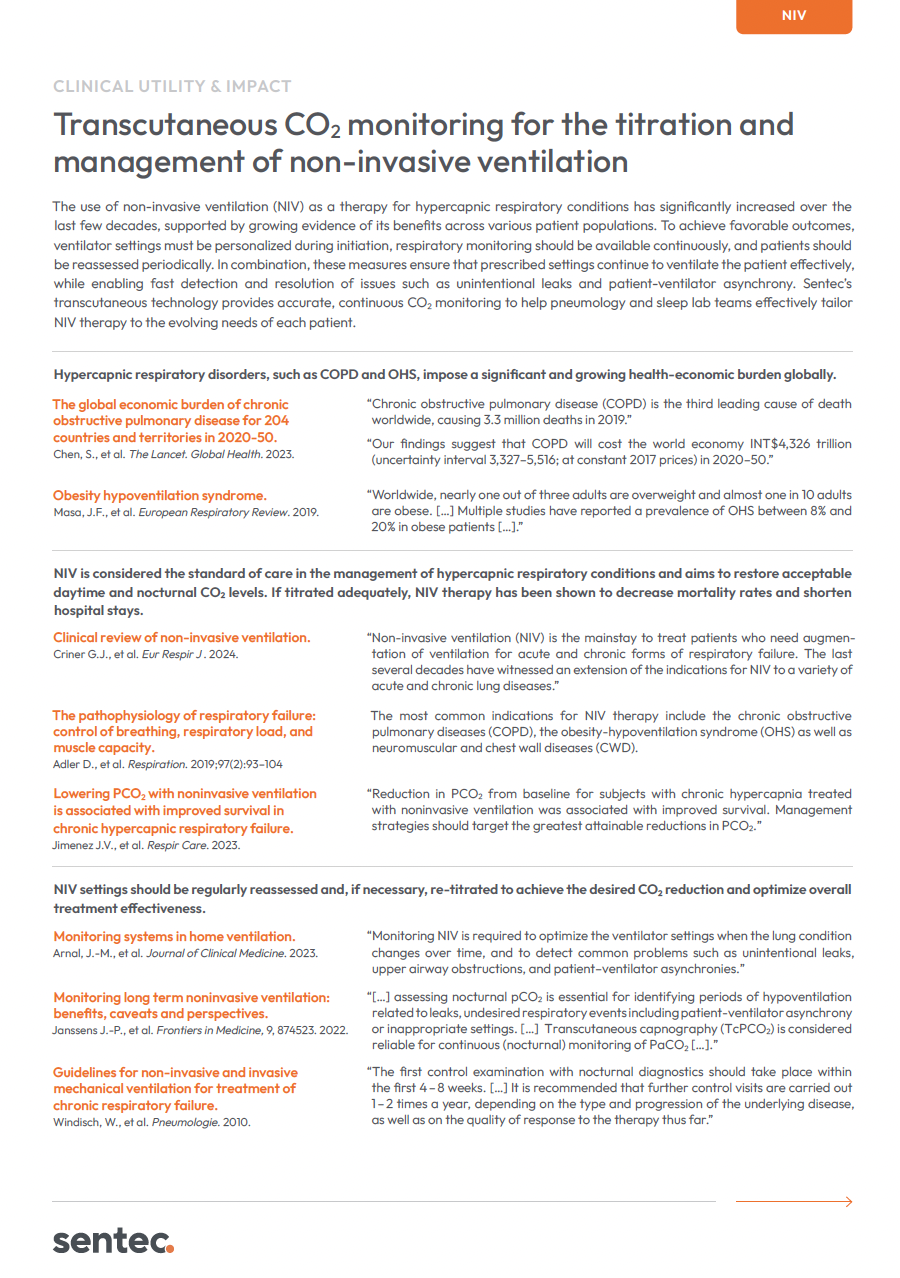
This clinical impact summary provides an overview of the evidence showing how transcutaneous CO2 monitoring can support your clinical practice:

  • Increasing global burden: Hypercapnic respiratory disorders such as COPD and OHS create a significant and increasing health-economic burden.
  • Improved outcomes with well-titrated NIV: NIV helps restore daytime and nocturnal CO2 levels and can reduce mortality and shorten hospital stays.

  • Regular reassessment and titration: Continuous CO2 monitoring allows clinicians to assess and titrate NIV settings to effectively tailor treatment to the individual patient.

  • Better accuracy and feasibility: Transcutaneous CO2 monitoring has demonstrated higher accuracy than end-tidal CO2 and better feasibility than both end-tidal monitoring and arterial blood gases.

  • Guideline-supported practice: European clinical practice guidelines include transcutaneous CO2 monitoring for NIV titration and management.

transcutaneous monitoring in the NICU: clinical utility and impact

Non-invasive ventilation (NIV) for hypercapnic respiratory conditions has grown substantially, supported by strong evidence across patient groups. To achieve the best outcomes, ensure effective support, and enable quick detection of issues, settings should be personalized, ventilation monitored continuously, and patients reassessed regularly.

This clinical impact summary provides an overview of the evidence showing how transcutaneous CO2 monitoring can support your clinical practice:

  • Increasing global burden: Hypercapnic respiratory disorders such as COPD and OHS create a significant and increasing health-economic burden.
  • Improved outcomes with well-titrated NIV: NIV helps restore daytime and nocturnal CO2 levels and can reduce mortality and shorten hospital stays.

  • Regular reassessment and titration: Continuous CO2 monitoring allows clinicians to assess and titrate NIV settings to effectively tailor treatment to the individual patient.

  • Better accuracy and feasibility: Transcutaneous CO2 monitoring has demonstrated higher accuracy than end-tidal CO2 and better feasibility than both end-tidal monitoring and arterial blood gases.

  • Guideline-supported practice: European clinical practice guidelines include transcutaneous CO2 monitoring for NIV titration and management.

Meet the tCOM+

Developed with care, designed for confidence.

The tCOM+ offers continuous monitoring of tcPCO2, SpO2, and PR with a sleek new look and feel. This latest model includes significant software advances that improve workflow for providers, while continuing to support reduced blood draws and proactive ventilator management across care areas.
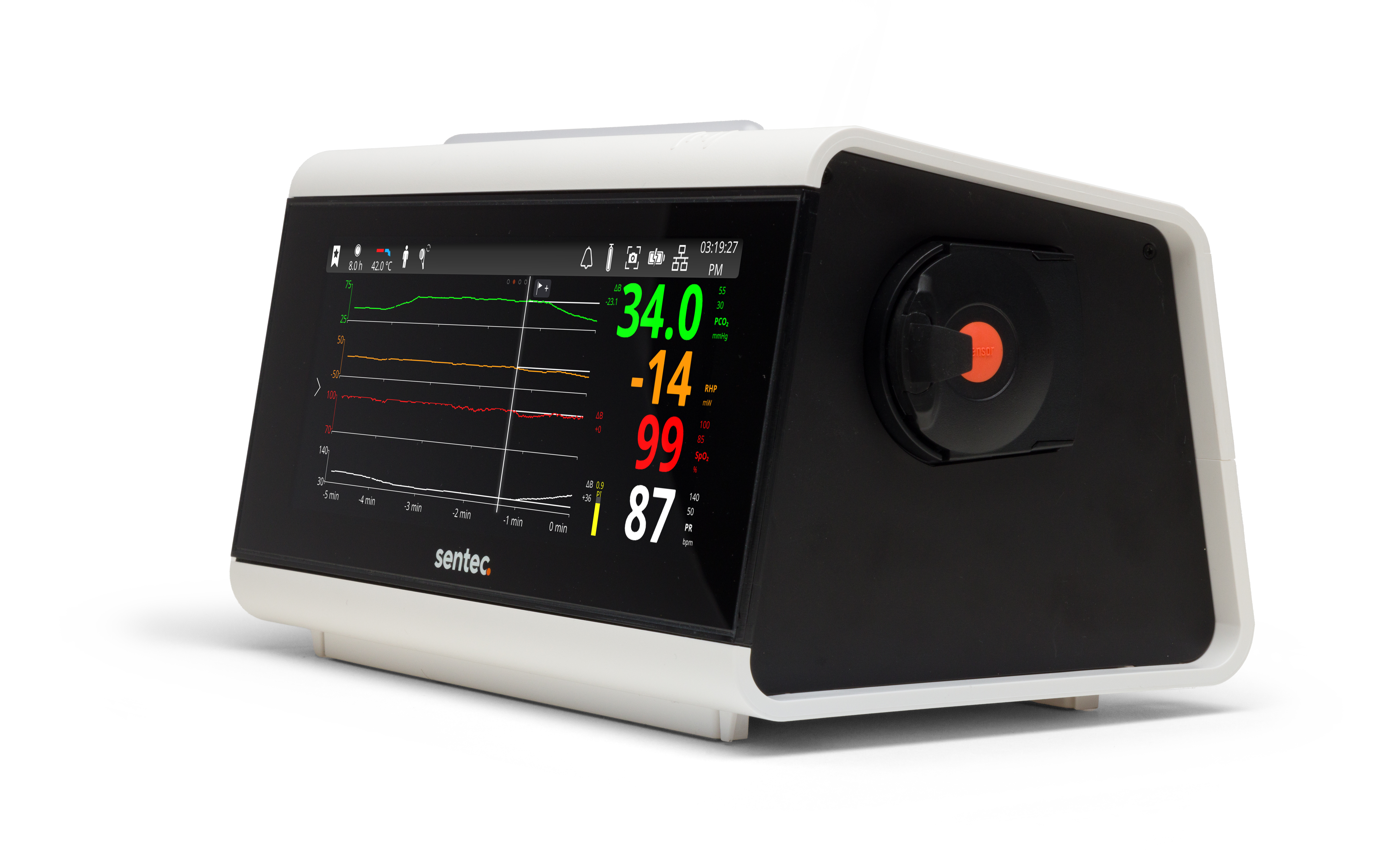
tCOM-device-angled
Stay up-to-date with Sentec

Related Posts

  • Product Brochure

    Continuous, Noninvasive CO2 Monitoring for Sleep and NIV Centers

    Accurately measure CO2 in the sleep lab and in NIV management units.

  • Product Spotlight

    Accurate transcutaneous CO2 monitoring for agile respiratory care teams

    Explore how transcutaneous CO₂ monitoring delivers noninvasive, real-time insights to support better outcomes for both clinicians and patients.

  • Whitepaper

    Reducing Pain in the NICU: A Quality Improvement Initiative

    Discover how Woman’s Hospital cut blood gas draws by 50% using transcutaneous CO₂ monitoring, standardized protocols, and staff-led care improvements.