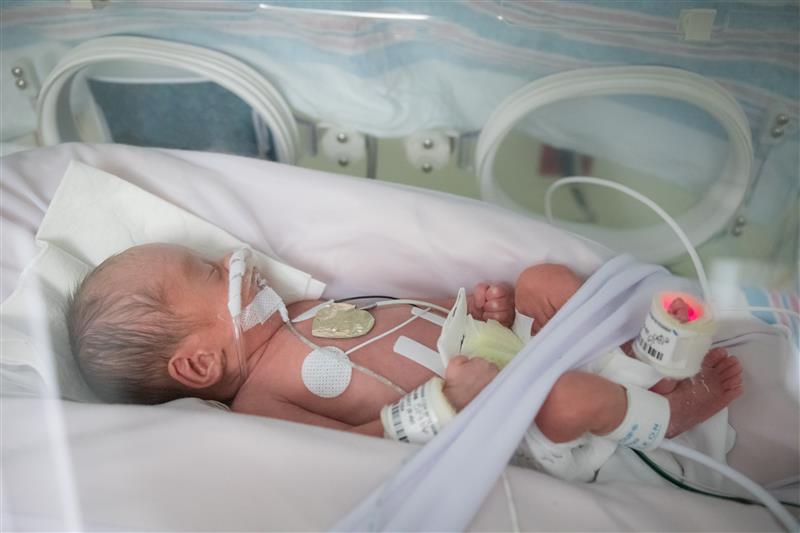
How can transcutaneous monitoring help support your neonatal patients?

Sentec transcutaneous technology overcomes many of the current limitations and challenges associated with CO2 measurement in the NICU by providing accurate, continuous, noninvasive CO2 values regardless of ventilation method or V/Q mismatch. Sentec transcutaneous monitoring provides consistent, independent CO2 measurement all while promoting neuroprotective efforts to deliver clustered care, protect skin integrity, and reduce the frequency of blood draws.

This paper explores the clinical utility of transcutaneous monitoring in the NICU as highlighted in the literature, covering: 

  • The importance of CO2 monitoring in the NICU, for both protecting the brain from IVH as well as properly implementing lung protective ventilatory strategies
  • The risks associated with arterial blood gases and capillary heel sticks, such as blood loss, infection, and pain
  • How transcutaneous CO2 monitoring can help reduce the frequency of blood draws in the NICU
  • The limitations of blood gases as a single point-in-time measurement, and how continuous CO2 monitoring may reduce the time neonatal patients spend outside normal CO2 ranges
  • How end tidal CO2 can underestimate PaCO2, is often infeasible and/or inaccurate in the NICU population, and is incompatible with lung-friendly high frequency ventilation methods
  • The demonstrated safety of Sentec’s digital transcutaneous monitoring for preterm infant skin
  • The indication of transcutaneous monitoring in multiple practice guidelines
transcutaneous monitoring in the NICU: clinical utility and impact

How can transcutaneous CO2 monitoring help support your neonatal patients?

Sentec transcutaneous technology overcomes many of the current limitations and challenges associated with CO2 measurement in the NICU by providing accurate, continuous, noninvasive CO2 values regardless of ventilation method or V/Q mismatch. Sentec transcutaneous monitoring provides consistent, independent CO2 measurement all while promoting neuroprotective efforts to deliver clustered care, protect skin integrity, and reduce the frequency of blood draws.

This paper explores the clinical utility of transcutaneous monitoring in the NICU as highlighted in the literature, covering:
  • The importance of CO2 monitoring in the NICU, for both protecting the brain from IVH as well as properly implementing lung protective ventilatory strategies
  • The risks associated with arterial blood gases and capillary heel sticks, such as blood loss, infection, and pain
  • How transcutaneous CO2 monitoring can help reduce the frequency of blood draws in the NICU
  • The limitations of blood gases as a single point-in-time measurement, and how continuous CO2 monitoring may reduce the time neonatal patients spend outside normal CO2 ranges
  • How end tidal CO2 can underestimate PaCO2, is often infeasible and/or inaccurate in the NICU population, and is incompatible with lung-friendly high frequency ventilation methods
  • The demonstrated safety of Sentec’s digital transcutaneous monitoring for preterm infant skin
  • The indication of transcutaneous monitoring in multiple practice guidelines

Meet the tCOM+

Developed with care, designed for confidence.

The tCOM+ offers continuous monitoring of tcPCO2, SpO2, and PR with a sleek new look and feel. This latest model includes significant software advances that improve workflow for providers, while continuing to support reduced blood draws and proactive ventilator management across care areas.

tCOM-device-angled

Stay up-to-date with Sentec


Related Posts

  • Sentec Article

    Protecting the Preterm Brain: The Role of CO2 in the First 72 Hours

    Les nourrissons prématurés sont extrêmement vulnérables : l’immaturité de leur physiologie les expose à un risque accru de complications. Si chaque heure compte en USIN, les 72 premières heures de vie constituent une période particulièrement critique pour la protection du cerveau en développement.

  • Sentec Article

    Targeting CO2 to Improve Outcomes in Patients with Chronic Hypercapnia

    A growing body of research raises an important question: Are patients with chronic hypercapnic respiratory failure being adequately managed? For these individuals, the presence of elevated CO2 levels alongside normal or near-normal pH levels — a result of renal compensation — is often overlooked.

  • Sentec Article

    Sleep and Breathing in Neuromuscular Disorders

    For people living with neuromuscular disorders (NMD), such as myasthenia gravis, Duchenne muscular dystrophy, and amyotrophic lateral sclerosis (ALS), sleep and breathing difficulties can affect daily life and long-term health. Weakened respiratory muscles can make breathing more difficult, while disrupted sleep adds to the burden of the condition.