
For people living with neuromuscular disorders (NMD), such as myasthenia gravis, Duchenne muscular dystrophy, and amyotrophic lateral sclerosis (ALS), sleep and breathing difficulties can affect daily life and long-term health. Weakened respiratory muscles can make breathing more difficult, while disrupted sleep adds to the burden of the condition.
Addressing sleep-related breathing issues requires an individualized approach. Noninvasive ventilation (NIV), when appropriate, along with ongoing monitoring and management, can be an effective therapy for NMD patients to address disordered sleep, lessen symptoms, and improve overall outcomes.
What can disrupt sleep in people with neuromuscular disorders?
People living with neuromuscular disorders may experience several challenges that disrupt sleep, including:
- Limited mobility
- Hypoventilation
- Impaired cough
- Difficulty swallowing (dysphagia)
- Muscle cramps and twitching (fasciculations)
- Spasticity
- Restless legs
- Pain
- Sleep apnea
- Tingling or other altered sensations (paresthesia)
- Feelings of helplessness
Sleep-Disordered Breathing in Neuromuscular Disorders
People with NMD often experience sleep-disordered breathing, as respiratory and upper airway muscle weakness can make it difficult to adequately bring air into and out of the lungs – further exacerbated by lying supine during sleep.
In a 2020 survey of people with ALS and their caregivers, difficulty sleeping and shortness of breath were among the most commonly reported symptoms.1 Commonly, NMD patients will be diagnosed with obstructive sleep apnea, central sleep apnea, and sleep-related hypoventilation.
Common Sleep-Related Breathing Disorders in NMD
- Obstructive sleep apnea: Repeated episodes of upper airway collapse during sleep.
- Central sleep apnea: Repeated pauses in the drive to breathe during sleep.
- Sleep-related hypoventilation: Reduced air volume per breath and per minute during sleep.
Sleep-disordered breathing can have both immediate and long-term consequences for people with NMD. Disrupted sleep can lead to symptoms like excessive daytime sleepiness and fatigue. And over time, sleep-disordered breathing can reduce quality of life for individuals with NMD and, when not managed, can contribute to respiratory failure and increased morbidity and mortality.2
Detecting Sleep-Related Breathing Disorders & The Importance of CO2
Early detection of sleep-related breathing disorders can support proactive care for people with NMD. Sleep studies and appropriate monitoring tools help guide diagnosis and treatment.
Both oxygenation and ventilation are essential components of healthy breathing during sleep, yet many sleep labs routinely measure only oxygenation (via pulse oximetry). When oxygen levels look stable, it’s easy to assume ventilation is adequate, but that’s not always the case.
Oxygenation does not reliably reflect ventilation. In patients with neuromuscular disorders, one study found that 41% of those with nocturnal alveolar hypoventilation had CO2 abnormalities, even though most had normal oxygen saturation readings.3
Overlooking CO2 in sleep lab patients can have serious consequences, as hypercapnia (elevated CO2), the result of inadequate ventilation, has been associated with:
- Cognitive deficits4
- More exacerbations in people with COPD5
- Higher mortality risk6
Addressing Sleep-Disordered Breathing with Noninvasive Ventilation
Noninvasive ventilation (NIV) is a key intervention for managing sleep-related breathing problems and chronic respiratory failure in people with NMD. Assessment for NIV might consider symptoms — such as insomnia, daytime sleepiness, and difficulty breathing at rest — alongside lung function tests and carbon dioxide measurements.
By supporting breathing, NIV can improve ventilation, gas exchange, and oxygenation. It can also reduce the apnea-hypopnea index and improve sleep architecture, helping people with NMD sleep more effectively.
Beyond these immediate effects, NIV may offer longer-term benefits. Studies in people with ALS have associated NIV with:
Improved quality of life7
Prolonged survival7
Slower progression of non-respiratory motor deficits8
The Role of Transcutaneous CO2 Monitoring in Managing Neuromuscular Disorders
Managing sleep-disordered breathing in people with NMD requires more than identifying a problem once. As respiratory muscle weakness progresses, breathing support needs can change. Ongoing assessment helps care teams evaluate ventilation and determine whether NIV continues to meet an individual’s needs.
Since hypoventilation and elevated CO₂ can occur without substantial oxygen desaturation, assessing CO₂ during sleep studies and follow-up care can reveal ventilation problems that pulse oximetry alone may miss.
While arterial blood gas analysis is considered the gold standard for measuring arterial CO₂, sampling is invasive and provides a snapshot rather than an overnight trend. End-tidal CO₂ monitoring measures CO₂ in exhaled gas continuously, but mask leaks and gas flow during NIV can limit its suitability for assessing ventilation.
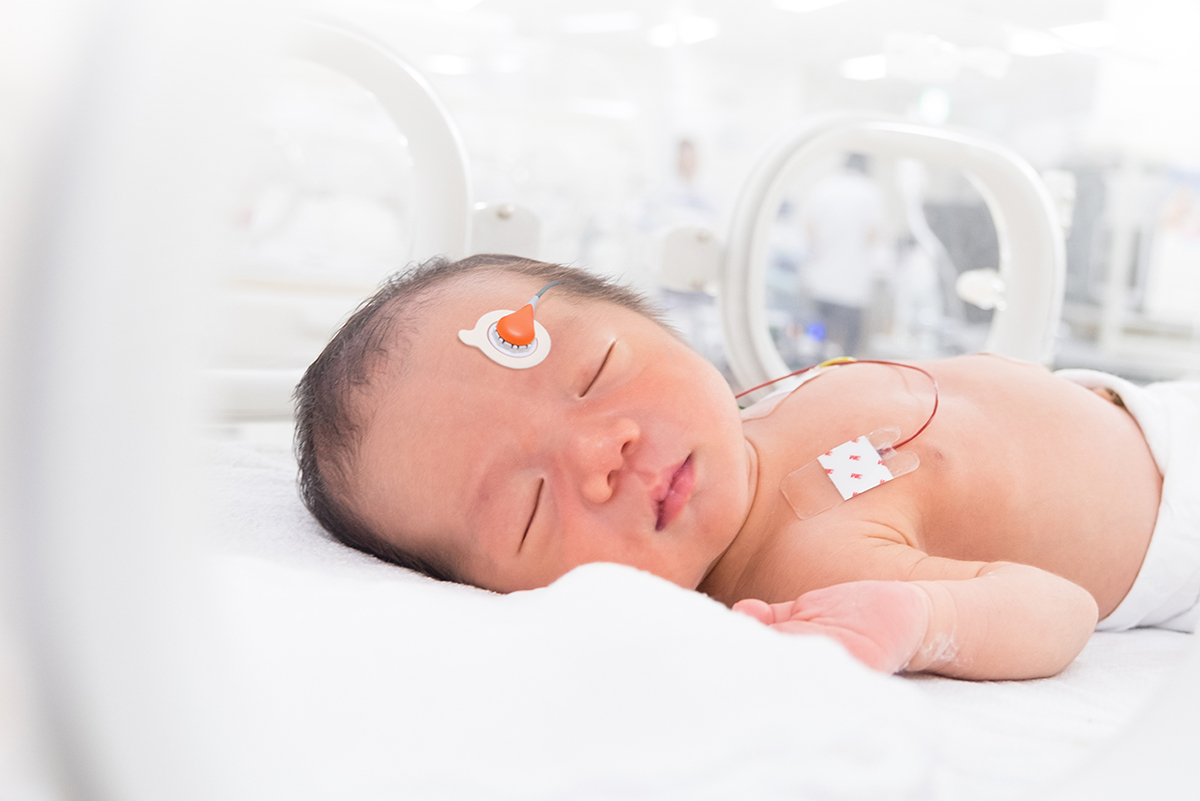
Transcutaneous CO₂ monitoring offers a continuous, noninvasive monitoring method. A heated sensor applied to the skin estimates arterial CO₂, allowing care teams to follow trends during sleep without repeated blood sampling. Because it does not depend on assessing exhaled gas, it can be useful during NIV, when obtaining reliable end-tidal measurements is challenging.
This technology can support informed clinical assessment and decision-making in sleep and NIV centers, including:
- Detection of nocturnal hypoventilation with continuous, accurate overnight readings beyond what SpO2 alone can detect.
- Continuous overnight assessment rather than isolated measurements, supporting a more complete view of gas exchange during sleep studies and NIV therapy.
- Guidance for initiating, regularly reassessing, and titrating NIV settings to optimize treatment effectiveness.
For people living with NMD, effective respiratory care connects recognition of sleep-related breathing problems with ongoing, individualized management. By looking beyond oxygen saturation and incorporating CO₂ assessment when appropriate, care teams can gain a more complete understanding of overnight breathing and make better-informed decisions about ventilatory support.
References:
- Brizzi, K.T., et al. Understanding the needs of people with ALS: a national survey of patients and caregivers. Amyotroph Lateral Scler Frontotemporal Degener. 2020.
- Irfan, M., et al. Neuromuscular disorders and sleep in critically ill patients. Crit Care Clin. 2015.
- Nardi, J., et al. Nocturnal oximetry and transcutaneous carbon dioxide in home-ventilated neuromuscular patients. Respir Care. 2012.
- Beaudin, A.E., et al. Contribution of hypercapnia to cognitive impairment in severe sleep-disordered breathing. J Clin Sleep Med. 2022.
- Kitajima, T., et al. Relationship Between Episodic Nocturnal Hypercapnia and History of Exacerbations in Patients with Advanced Chronic Obstructive Pulmonary Disease. Int J Chron Obstruct Pulmon Dis. 2022.
- Brillante, R., et al. An overnight increase in CO2 predicts mortality in sleep disordered breathing. Respirology. 2012.
- Bourke, S.C., et al. Effects of non-invasive ventilation on survival and quality of life in patients with amyotrophic lateral sclerosis: a randomised controlled trial. Lancet Neurol. 2006.
- Grassano, M., et al. Giving Breath to Motor Neurons: Noninvasive Mechanical Ventilation Slows Disease Progression in Amyotrophic Lateral Sclerosis. Ann Neurol. 2024.