
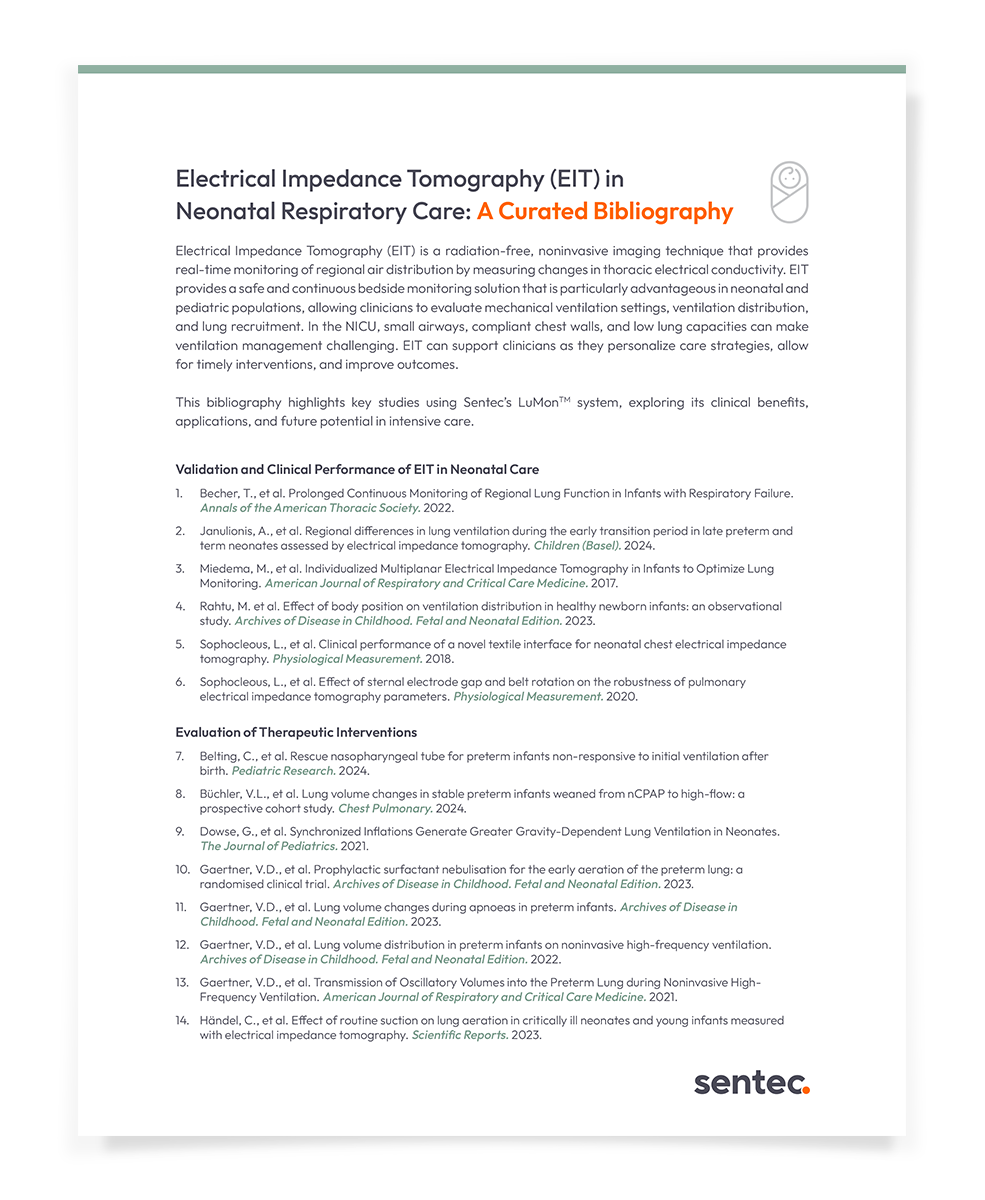
Explore peer-reviewed research on EIT's role in neonatal ventilation, lung recruitment, and personalized respiratory care.
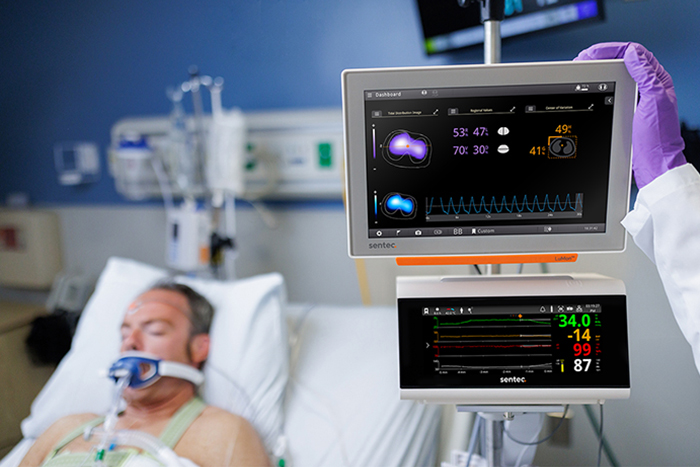
In the NICU, small airways, compliant chest walls, and minimal lung volumes can make ventilation management challenging. EIT provides a safe and continuous bedside monitoring solution that enables clinicians to evaluate mechanical ventilation settings, ventilation distribution, and lung recruitment in neonatal patients.
Explore peer-reviewed research on EIT's role in neonatal ventilation, lung recruitment, and personalized respiratory care.
In the NICU, small airways, compliant chest walls, and minimal lung volumes can make ventilation management challenging. EIT provides a safe and continuous bedside monitoring solution that enables clinicians to evaluate mechanical ventilation settings, ventilation distribution, and lung recruitment in neonatal patients.
What is Electrical Impedance Tomography?
EIT provides noninvasive, functional imaging that provides dynamic, regional information about ventilation and lung recruitment to support personalized care.
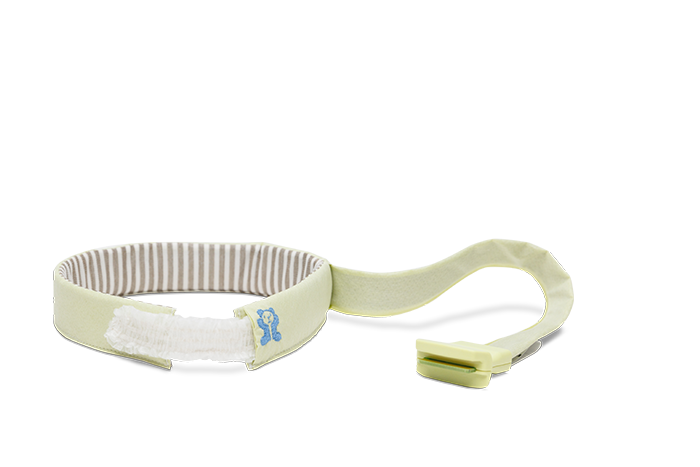
Gentle belt for continuous comfort
The soft, fabric EIT belt sends gentle, alternating currents through the thorax and measures resulting voltages.
- Skin-safe, non-adhesive belts with sizes that accommodate diverse patient sizes, from adults to the smallest neonates
- Up to 72 hours of monitoring
- Automatic tracking and display of patient position with an integrated orientation sensor
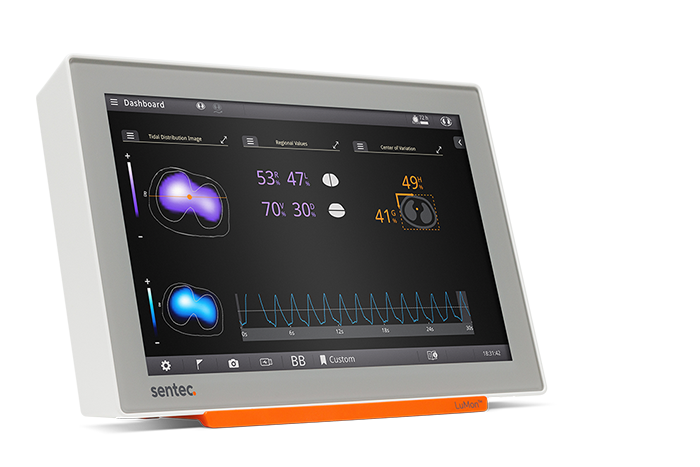
Intuitive monitor for individualized care
A sophisticated algorithm translates the impedance measurements into real-time images and measures of air distribution within the chest, displayed in an easy-to-understand interface.
- Live images and values display breath-to-breath changes in air distribution in the lung
- Customizable display configurations for tailored monitoring
- Integrates with other bedside devices, including ventilators, to provide a more complete clinical picture
What is Electrical Impedance Tomography?
EIT provides noninvasive, functional imaging that provides dynamic, regional information about ventilation and lung recruitment to support personalized care.
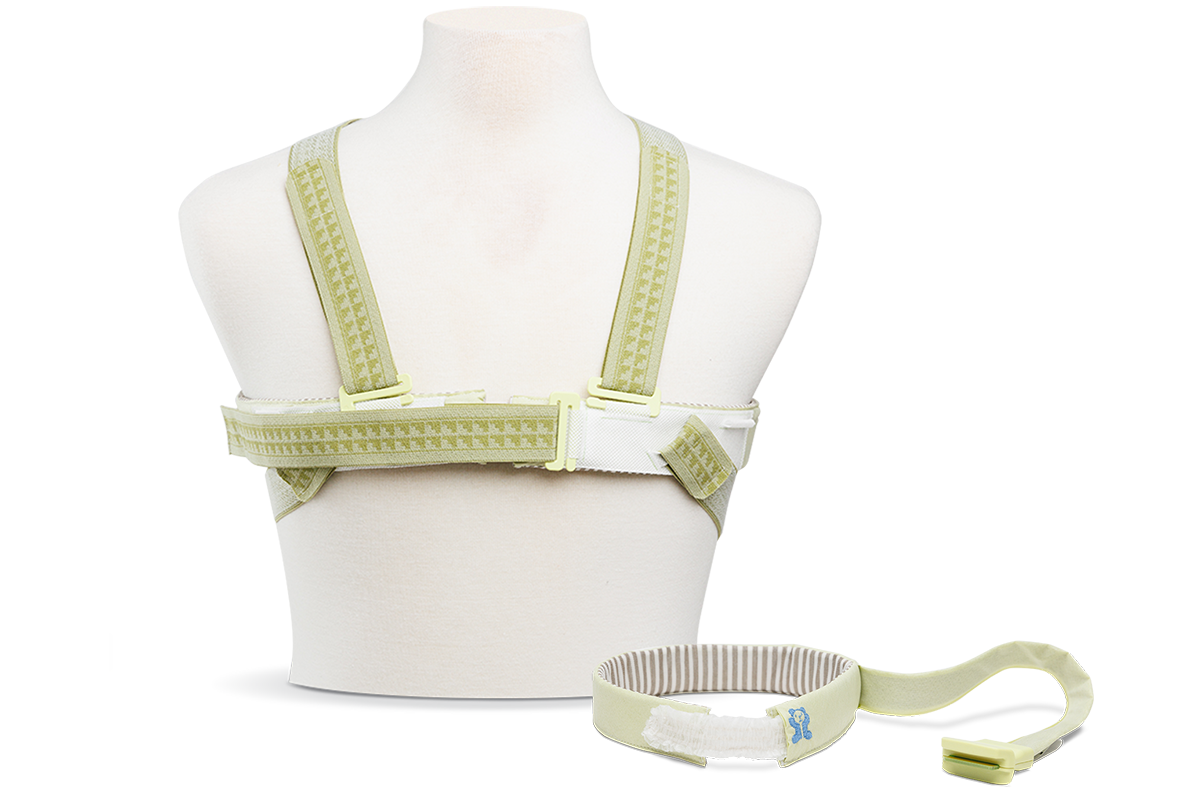
Gentle belt for continuous comfort
The soft fabric EIT belt sends gentle alternating currents through the thorax and measures resulting voltages.
- Skin-safe, non-adhesive belts with sizes that accommodate diverse patient sizes, from adults to the smallest neonates
- Up to 72 hours of patient monitoring
- Automatic tracking and display of patient position with an integrated orientation sensor
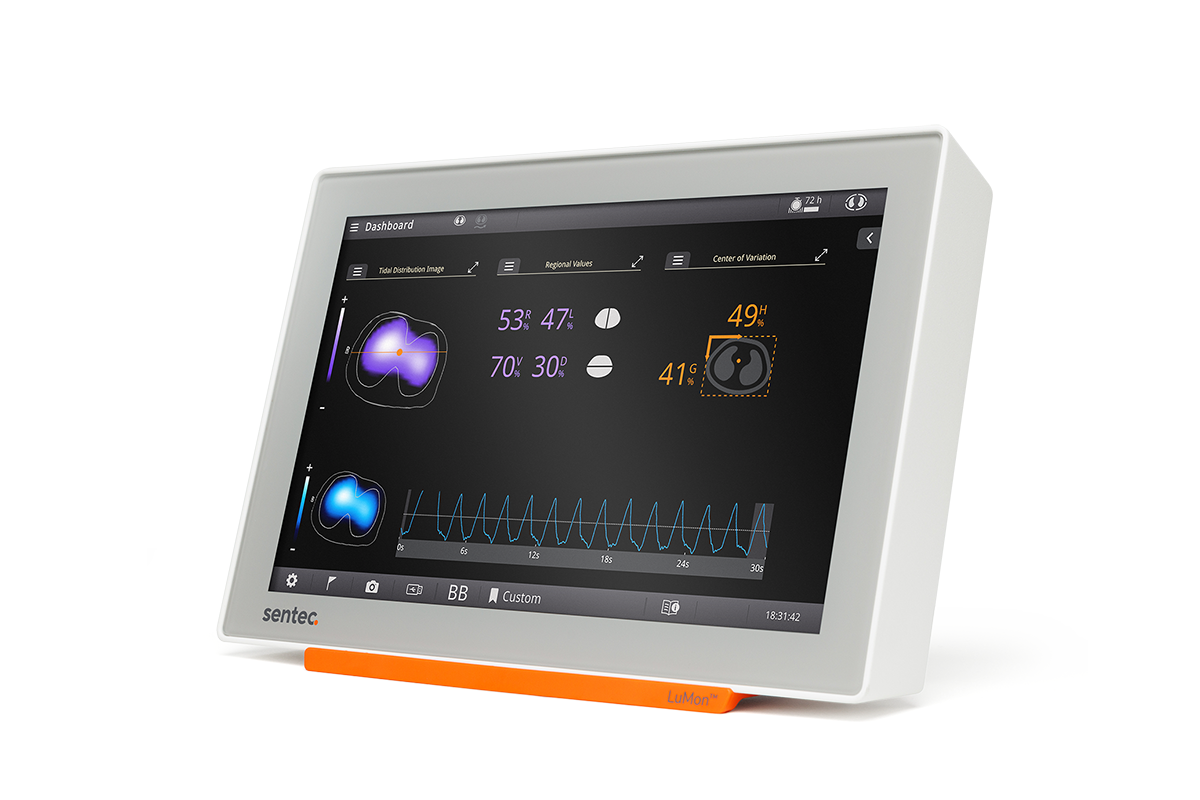
Intuitive monitor for individualized care
A sophisticated algorithm translates the impedance measurements into real-time images and measures of air distribution within the chest, displayed in an easy-to-understand interface.
- Continuous, real-time visibility to changes in regional air distribution at the bedside
- Customizable display allows configurations for tailored monitoring
- Integrates with other bedside devices, including ventilators, to provide a more complete clinical picture
Stay up-to-date with Sentec